Countermeasures during a polygraph examination
What are polygraph countermeasures?
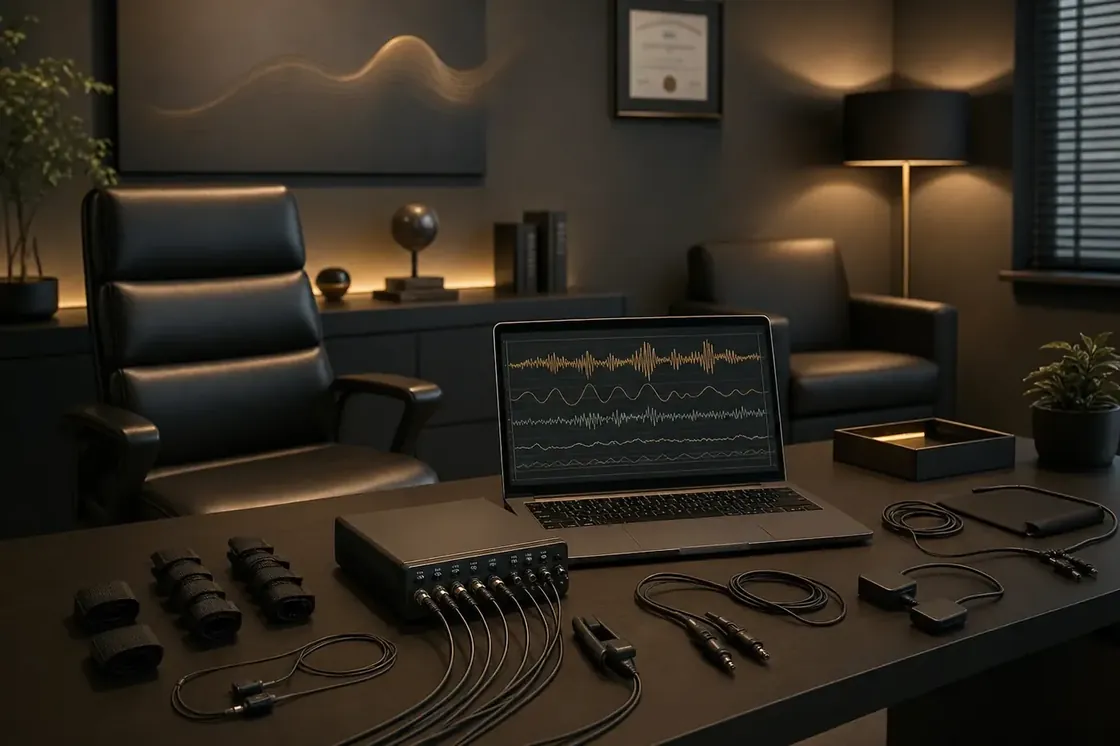
Countermeasures during a polygraph examination are conscious or unintentional actions that may alter a person’s natural psychophysiological responses.
What can affect the examination
Medication, severe fatigue, stress, deliberate muscle tension, or failure to follow the examiner’s instructions can affect data quality. Such actions do not guarantee a desired result and may lead to an inconclusive record or postponement of the examination.
Medication
Stress
Fatigue
Feeling unwell
Not following recommendations
What does a polygraph record?
Breathing
Cardiovascular responses
Skin conductance
Movement activity
How to prepare for the examination
Before testing, the examinee should disclose relevant health conditions and any medication prescribed by a doctor. Treatment should not be stopped, changed, or supplemented without medical advice.
The VERIDICA approach
VERIDICA conducts examinations professionally, confidentially, and with careful consideration of each person’s condition and the quality of the recorded physiological data.
Frequently asked questions
What does a polygraph measure?
A polygraph records breathing, cardiovascular responses, skin conductance and movement. It does not directly detect lies; a trained examiner interprets reaction patterns.
Can you cheat a polygraph?
Deliberate countermeasures do not guarantee a desired result and may reduce data quality or lead to postponement. Disclose health conditions and prescribed medication beforehand.
How should I prepare for a polygraph?
Sleep well, avoid extreme fatigue and excess stimulants, eat lightly, and never stop prescribed treatment without medical advice. Tell the examiner about medication and wellbeing.
Need advice before an examination?
Book a confidential consultation — a specialist will explain preparation and answer your questions.
Book a consultation →